Money
Money is more hidden than sex, and just as bodily.
What if we actually talked about it?
Where to startYou know this one
- You earn more than your partner, and at home you both act as if you don't.
- You are the one the family calls when money runs short, and nobody asks what it costs you.
- You were raised never to talk about it, and now your daughter asks what you earn.
- You set your price by what the last person dared to charge.
- You sign off projects in the millions and hesitate over invoicing for your own hours.
- You count every franc and still pay for the round.
There is a script, and the work is seeing yourself in it.
What keeps surfacing
Geneva, London, Kraków.
Three cities, four rooms, women who had never met, real money on the table.
What repeated
Giving flowed first, and fast. Receiving took longer. Asking came last, if it came at all.
What we did not expect
- Trust arrived faster in the room than it ever does online. In one room the women looked at each other before they looked at the money.
- The giving ran so far ahead of the asking that the money piled up with the one person who had not asked for it.
- Bringing more than the others felt like something to apologise for.
- In a room of women only, a different game became possible.
How much moved
The ripples
Money is not the story. It's a replay of the story in your life.
What was never said about money at the table is still being said, by your body, every time a bill arrives. Every household runs on money rules, and most are never said out loud. And whatever you have not looked at, your children inherit.
A team learns what it may ask for by watching the woman who leads it. The leader who cannot invoice her own worth builds a culture that under-asks, over-gives and calls it generosity.
Women's unpaid care work is worth at least US$10.8 trillion a year (Oxfam, 2020), and it appears in no national account. The systems that undervalue care, art, rest and women's work live in our bodies too. Changing how one woman receives is a vital small and real change in how value moves.
The practice
This is a living inquiry, held in intimate and abundant rooms. We use play, real money and the sensations of the body to see how resources move through us: desiring, asking, waiting, receiving, staying with what we receive, and redistributing. We question what we value and how that reflects in our lives.
The patterns only show themselves when women are in the room together. The room listens better than any one of us does alone. And what surfaces is information.
In their words
Anna managed to beautifully create a safe space, a caring space, where we could bring our full selves without fear of judgment.
The money game with Anna was really helpful to unveil my unconscious patterns around money that prevent me from fully opening myself to the abundance, to be able to receive, and put more consciousness in what I give.
A time to reflect on the role and relationship you, and other women, have with money.
Where to start
This is an invitation to go deeper.
Play the Game
Play surfaces what talking cannot. With real money on the table, we witness our patterns in real time: how we give and withhold, accumulate and release, ask and refuse. We notice what our bodies know that our minds have forgotten or buried. We meet in person, a small circle of women, because in a room of women a different game becomes possible. This is a journey of three touch points that deliberately opens the exploration of your relationship with money or enhances the one you've been on.
The inquiry we hold
What are the individual and collective patterns that shape our relationship with resources, particularly money? And how are they distinct for us as women - shaped by our physiology, our life stages, our economic positioning?
We meet it in three movements. First alone with me, in your own story. Then together, where the patterns only show in a room of women. Then in what we carry as women: the cycles of a body that does not produce at a steady rate, the seasons of mothering, caring and inheriting, and the economy that counts none of that as work.
Why Money, Why Now?
A 30-minute call, one to one, online
your own patterns
The Game Experience
An evening in person in Geneva, 6 women, real money
our shared patterns
What's possible now?
A group call online, a few weeks after the game
what is ours as women, and what we do with it
This is an intentional space, limited to 6 women at a time, so the interactions can nourish and exploration can deepen.
Dates for the in-person Game Experience
- Wednesday4 November17:30-21:006 womenFull
- Wednesday2 December17:30-21:006 womenFull
Booking opens soon. Leave your name and you will hear first.
You will hear first when booking opens. Nothing else.
Inspired by Daniel Ofman at Findhorn · Played in Geneva · London · Kraków
The Harvest
A season for women to discover their relationship with money on their own and together. The 2026 circle has closed; the next opens in summer 2027.
See The HarvestThe dates first, and occasional letters from inside the work. No hurry, no noise.
For groups, communities and networks
Bring this to your women (and men).
I am an anthropologist, experience designer and a trauma-informed facilitator. No experience of money is the same, no group dynamics are the same; I learn the group's culture, its histories, what it carries about money and worth, and hold the journey accordingly.
Six to twelve people · in person, with a pre session and integration session online · held in English
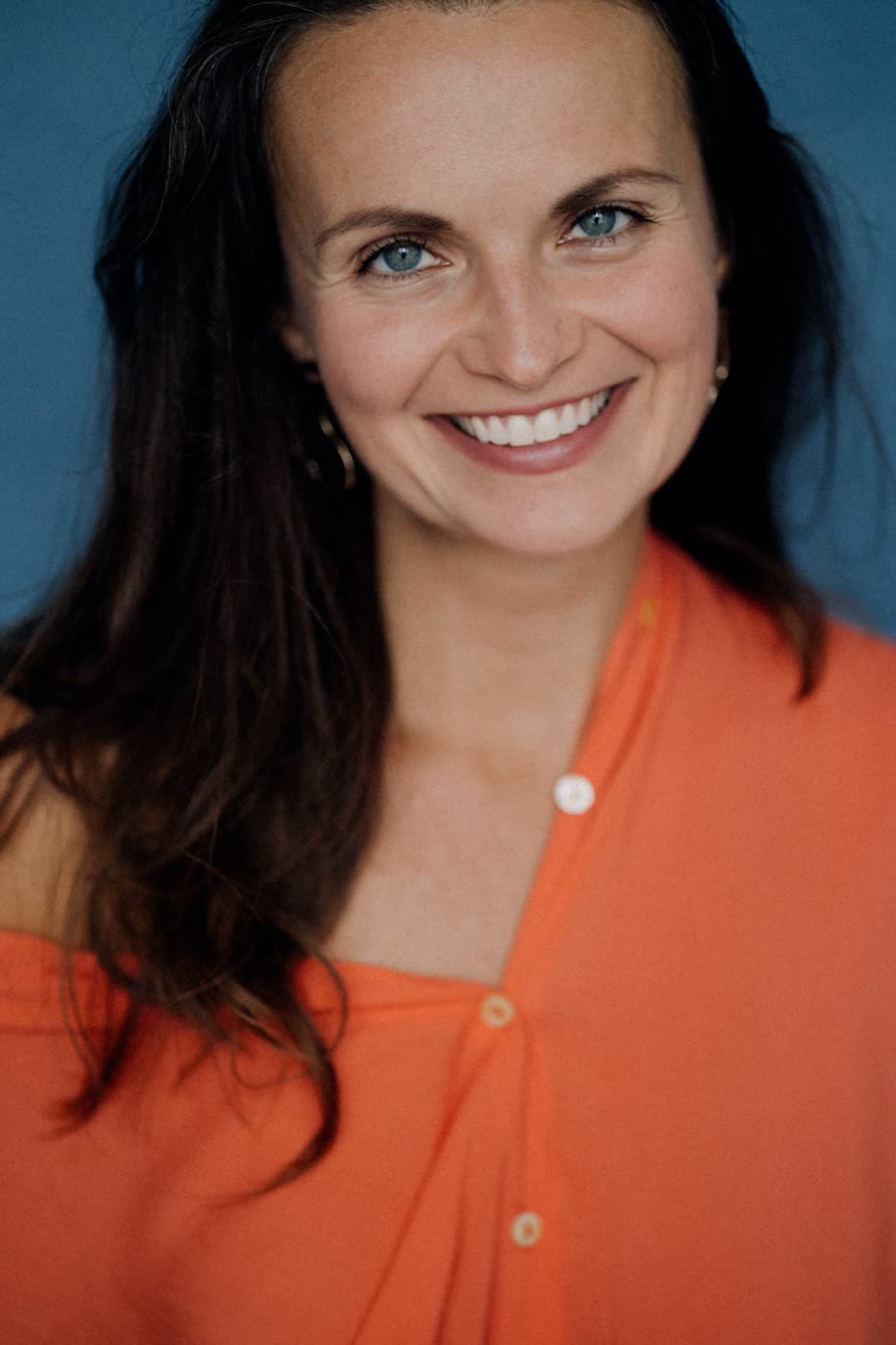
Who holds this
Anna Teresa Kopacz
I didn't come to this work because I figured money out. I came because I couldn't.
For years money flowed out of me easily and froze on the way in. I paid for my own degree in Switzerland on loans, burnt out in the rooms where the world's money is decided, and kept noticing that brilliant women around me, making decisions worth millions, went quiet at the same place I did: their own number.
I live in Geneva, a city built on finance, philanthropy and "rational" economics, and the question I keep sitting with is a very human one: what happens in us when money actually moves between us, in real time?
I ran the Money Game for years, in organisations and with strangers. It was not designed by women, or for women. When I began to hold it for women only, something else became possible. I facilitate from inside the inquiry, not above it. I am an anthropologist of modern life, and money is the place in it where women have been told the least.
I want to understand what money reveals in us, and what it makes possible between us.
In a gift economy, wealth is understood as having enough to share, and the practice for dealing with abundance is to give it away.Robin Wall Kimmerer · The Serviceberry