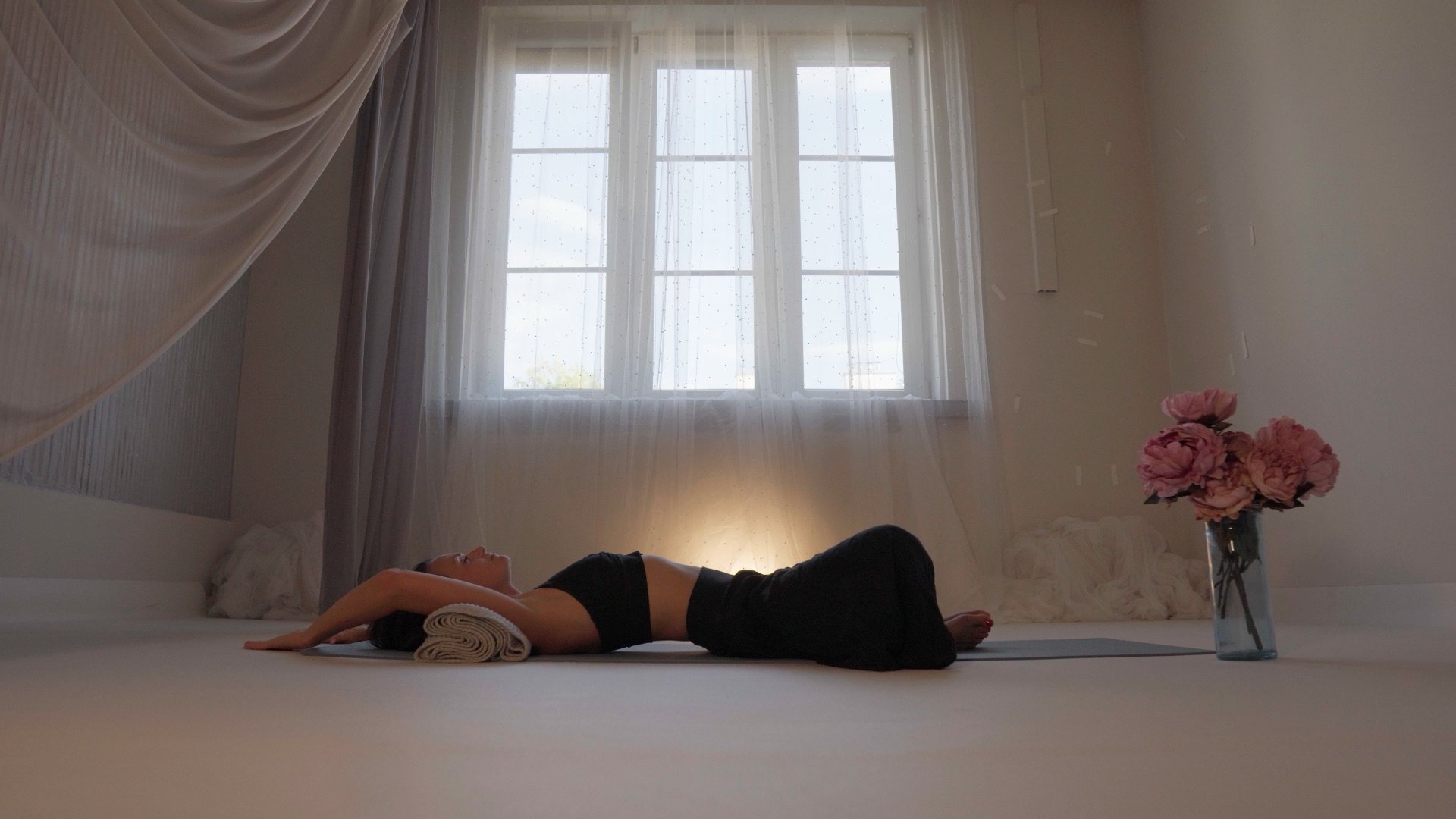
rhythmic movements
a way of meeting your body exactly where it is today, and learning to hear what it is telling you, through movement, breath and touch.
come practicea way of meeting your body exactly where it is today, and learning to hear what it is telling you, through movement, breath and touch.
come practiceThe living intelligence in our body is both cyclical and linear, more often moving like a spiral.hers, 22:58 - she typed "Living" with a capital L; cut map v4 sets it lowercase: confirm
Touch a point to explore.hers, 22:58
Often that was the best choice in the moment. Lying on the floor for a few minutes and listening to our body can also be a choice.
These practices give you more to choose from: a way to hear what your body is asking, being with what is and from there deciding, if a choice is needed.
In emergency rooms today, women who arrive in pain are less likely than men to be given pain relief, at the same pain score, by male and female doctors alike.1 So we learned to override, again and again.hers, 22:58 - her note: "override" is in the line above; maybe a different verb here. The editor's options follow
Reading your body is a sense, as real as sight, and its scientific name is interoception, the sense of what is happening inside you. What we call intuition is often this: the body, read well.
Your body already knows.Not necessarily in words.Not necessarily as an answer.But as sensation, rhythm, impulse, tension, ease, contraction, warmth, movement, orientation.
It is constantly sensing and integrating information - from your heartbeat, breath, gut, muscles, senses and surroundings, long before much of it reaches conscious awareness. The nervous system continually brings them together, predicts, adjusts and responds.
Much of this happens before it becomes conscious thought.
So the work begins not with telling you what your body means, but with giving you more ways to listen. And you find out by going there, again and again, and learning to listen.
This is why the practices begin at the pelvis, the womb, and move through movement, breath and touch. And why they are filmed: so you can follow with your whole body - seeing, hearing, moving and feeling your way in.
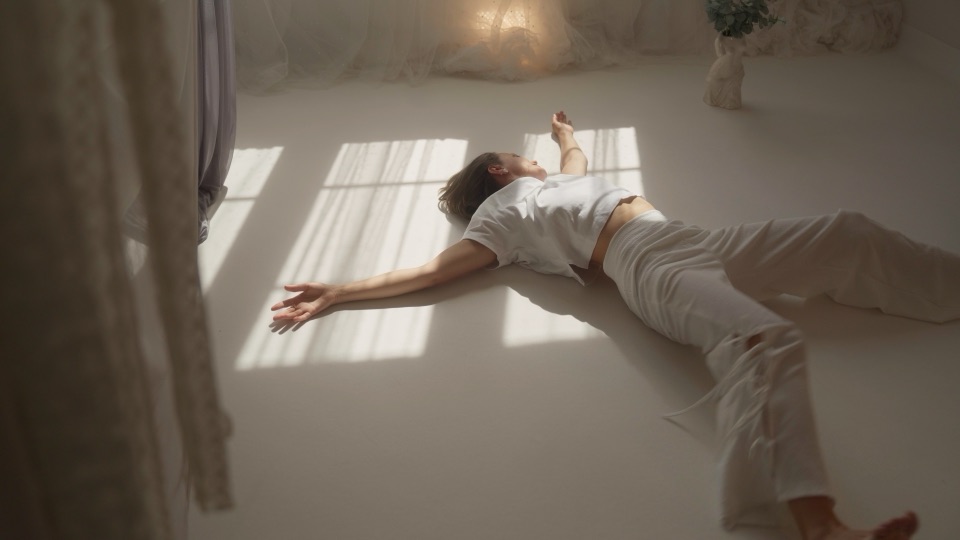
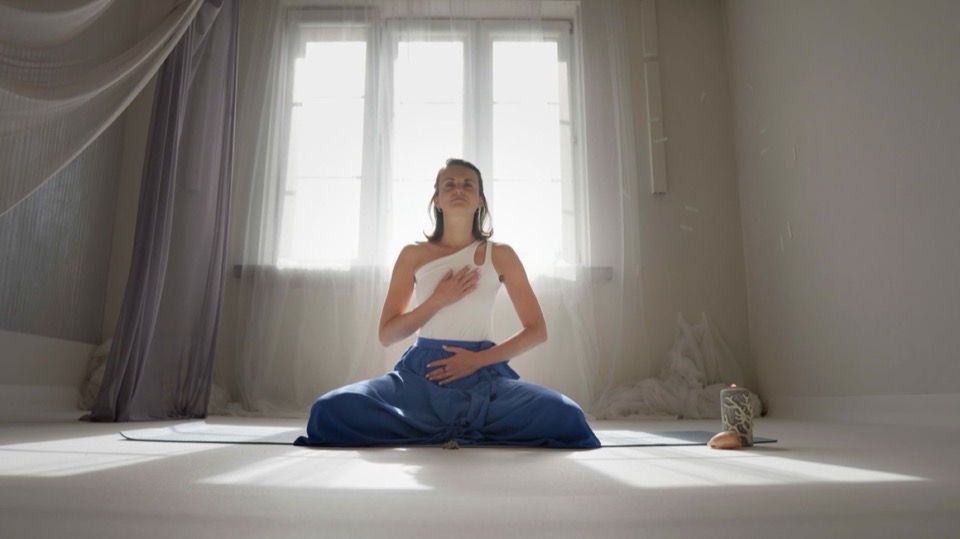
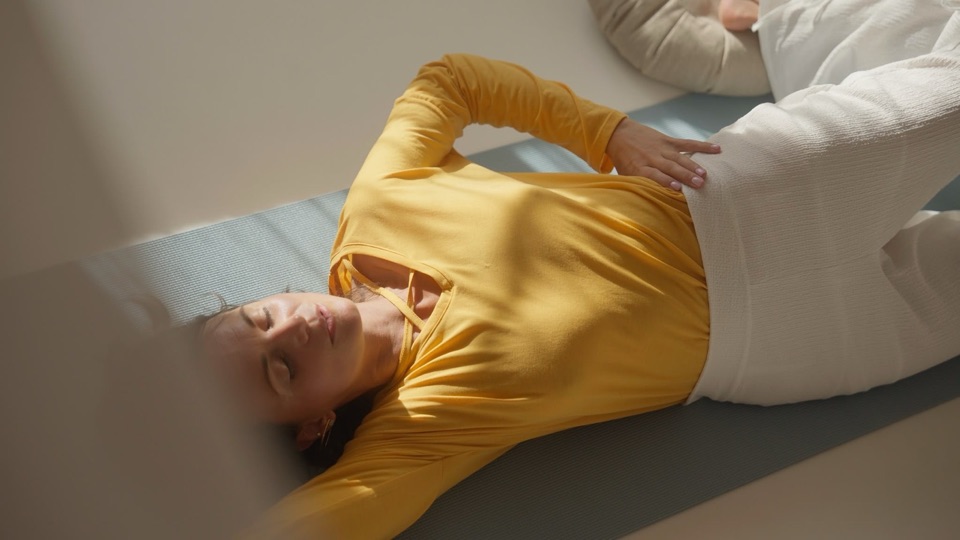
For a few hundred years the body has been treated as a machine for work2 and a woman's body as the part of the machine most likely to fail - an ancient Greek medical text called the womb "the origin of all diseases."3 That suspicion never quite left the clinic.
The painkiller, the coffee, the long night: sensible answers in a world that did not want to hear the question.
That is the harder way of knowing. The easier one comes as an aggregated answer: a chart, an app, a plan that tells you what day it is and how you should feel. Rhythmic Movements asks for something slower, deeper and more yours: that you become the one who reads your body.
It can be measured. On a London trading floor, the traders who could feel their own heartbeat most accurately made more money, and lasted longer in the job.4 And it can be learned. In studies, people who at first could not feel their heartbeat at all came to feel it through practice.5held for her yes
And the body you are learning to read is moving. Brain scans of women across a single cycle show the structure of the brain itself shifting, its grey and white matter changing with the rise and fall of hormones.6 You are not the same woman on day three as on day twenty. You were never meant to be. Medicine is catching up: in 2025 The Lancet's women's health journal called the menstrual cycle "a vital sign across the lifespan."7 The thing we were taught to hide is information about our whole health.
Some of what the body says is old. In one study, women's pelvic floor muscles tightened while they simply watched a threatening scene on a screen - nothing touched them.8held for her yes The center of the body holds what we have lived, the brace and the held breath included. That is why the practices return, again and again. The body has its own rhythm of contraction and expansion, and in feeling it you learn that what you feel will change.9 Slowly the old alarm and the true signal come apart, and body, mind and heart begin to read together.
None of this would surprise the women's traditions. More than two thousand years ago, a founding text of Chinese medicine described a woman's life in seven-year rhythms, from the first bleed at fourteen to the change at forty-nine.10 In the Tantric traditions of India, the creative power that moves through all of life is called Shakti, and it is held as feminine: "the breathing soil of the living earth, the depths of our instinctual nature and intuition." To live in it, one teacher writes, is to "listen to our body's natural rhythms."11 And the old stories carry the promise: "we can make the necessary corrections and return to our own natural cycles again."12
At the peak of my burnout in 2018, my feet felt cut off from the rest of my body.hers, from her Apple Note, 2 Sep 2026 · pending her yes (cut map v4)
I was in Mysore, India. I'd left the job at the World Economic Forum. I wandered into an Anglo-bookstore one afternoon. And there I found a book, Women Who Run with the Wolves. The more I read, the more questions I had.hers, from her LinkedIn post, 10 Mar 2026 · tidied: "I'd left. The job" → "I'd left the job at the World Economic Forum"
What followed was a winding road, a desire to feel my body, to be connected to the hurt, the tiredness, the anger, so that I would never again drive myself to the halt of physical and psychological pain I reached at that boiling point.hers, from her Apple Note, 2 Sep 2026
I disinhabited my body through most of my youth and 20s. Then I learnt to inhabit it bit by bit. Now I notice when I am not in my body and I translate the information into wisdom that helps me live a more alive life.
I have deeply experienced each and every one of these rhythms throughout my journey. It is about being in the body, in my lived experience and acknowledging where I am. It is about being with what I am feeling. The rhythms were living inside me and doing their work through my years of searching to feel more, to live more in myself. Revised, revised, revised, into seven - seven that are a spiral, moving continuously.
This is not a complete compass, but it is a lived compass that guides us back to the rhythms we are rarely allowed to experience in our day to day but live within us.
There's no one way in.hers, 18:01 (her own suggestion) - the editor's options follow
I can feel more than one of these at a time: sinking deep into the ground, in grief, while at the same time feeling a turning. There is no limitation to our experience.
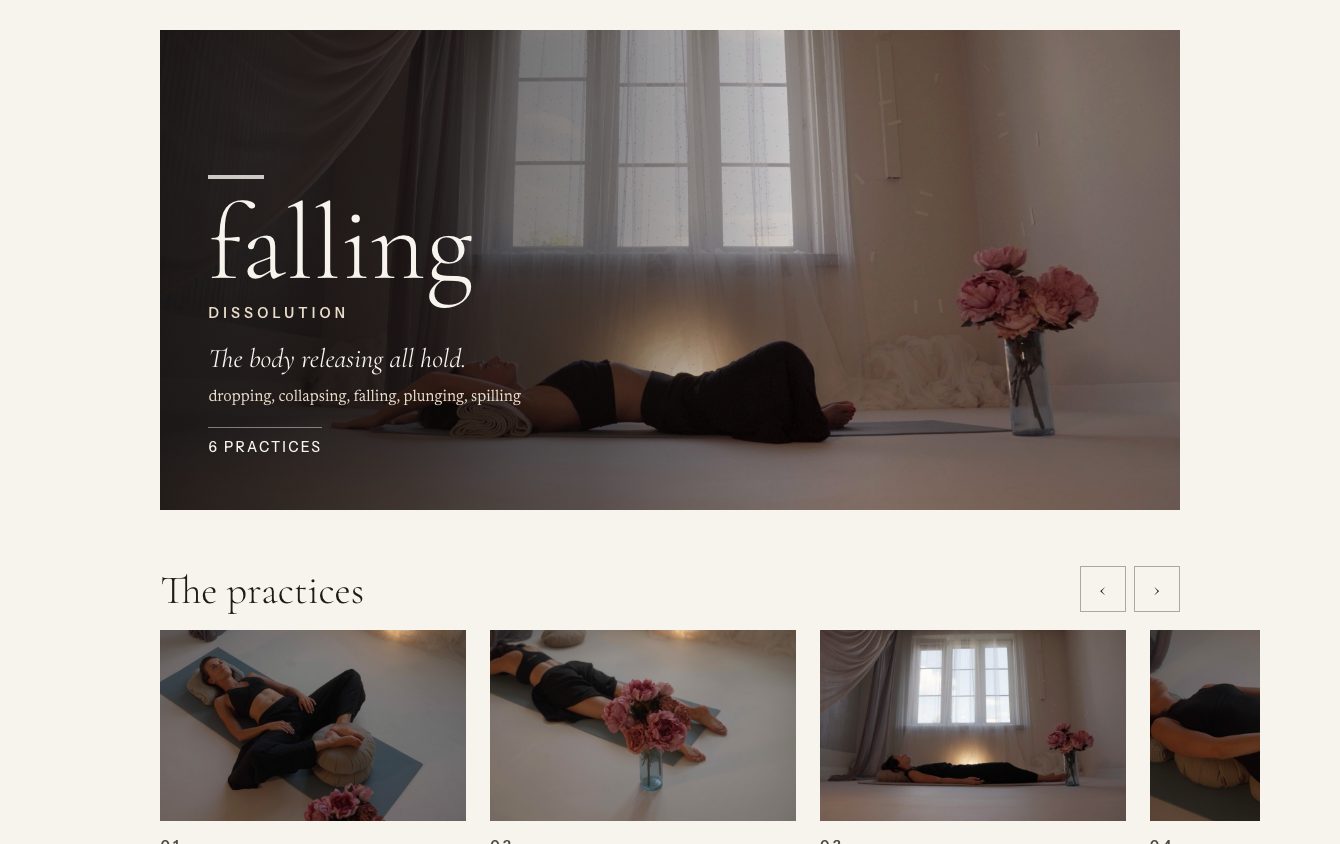
faces in practices 1.1 · 1.3 · 1.4 · 1.6 - for her look
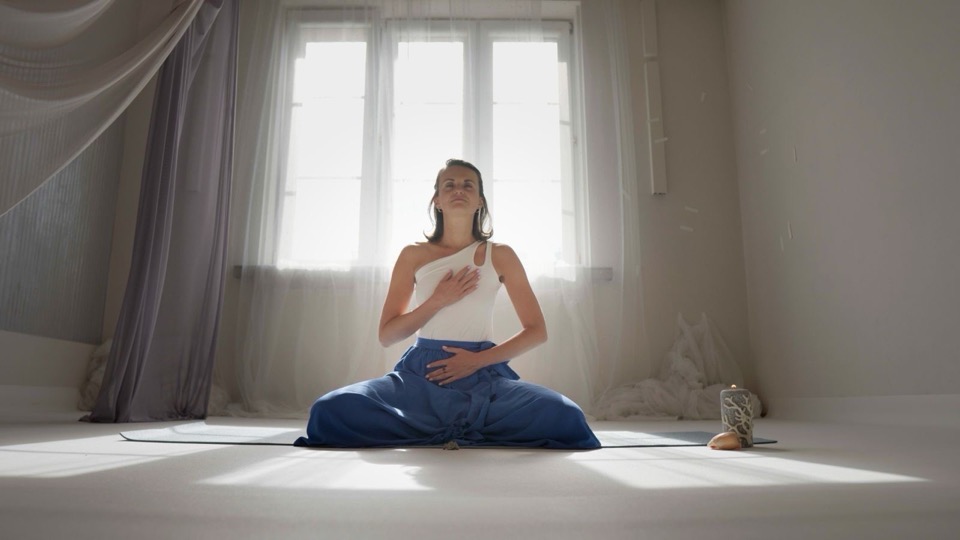
For a woman of all ages.Of all cycles.Of all body shapes and sizes.For women who want to fall in love with their body again.
These practices do not ask you to arrive feeling well. They ask you to arrive and be with.
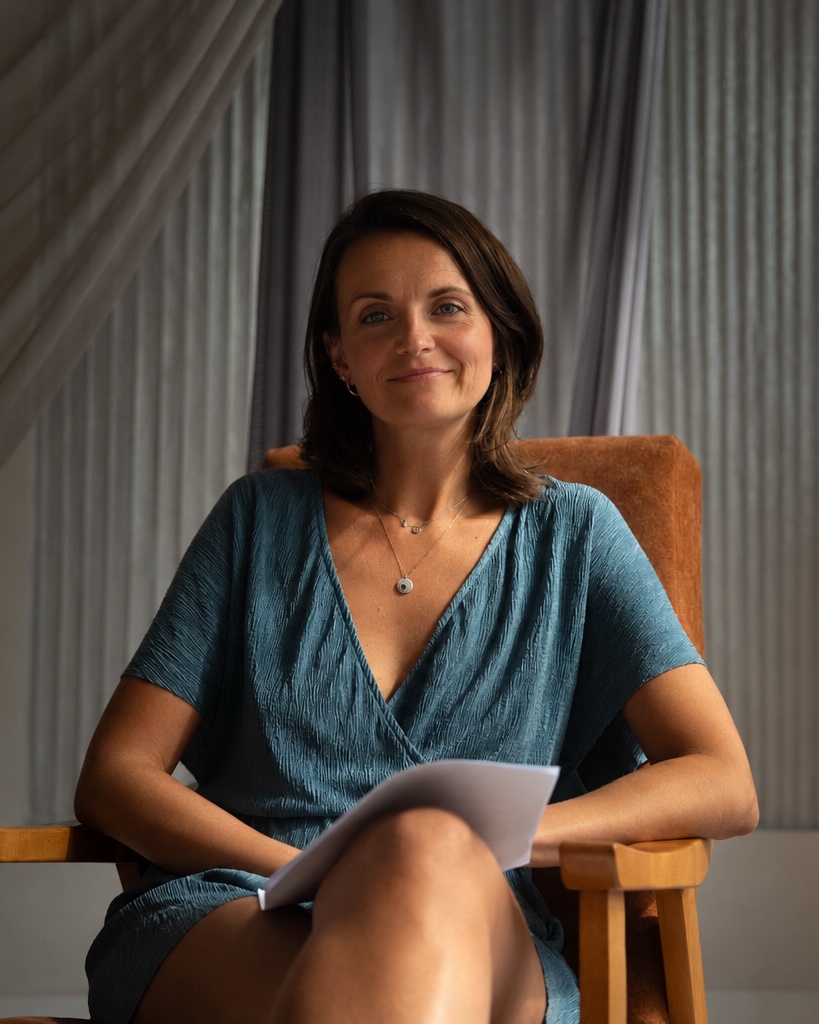
I know this work from the inside.
Somewhere in 2022, I started recording somatic practices. As an answer to an ask from the women in my life. Sharing with them at the height of their bleeding pains, as ways of relaxing the body after a stressful week. These videos were my way of transmitting what I was unlearning and remembering about my body.
I came to this work through many teachers, inspirations and mostly laying around in tears on my yoga mat, wondering what I was doing with my life. And other times desiring to express the bursting joy in my body, to feel it move me.
What I bring is not a method. It is the transmission of having genuinely moved and continuing to move through the territory of my body, discovering her landscape.
What I wish for you is that the landscape inside you becomes somewhere you desire to return to. Join as one of the founding women now.
Full library accessible from 1 November 2026.
Includes
The full library.
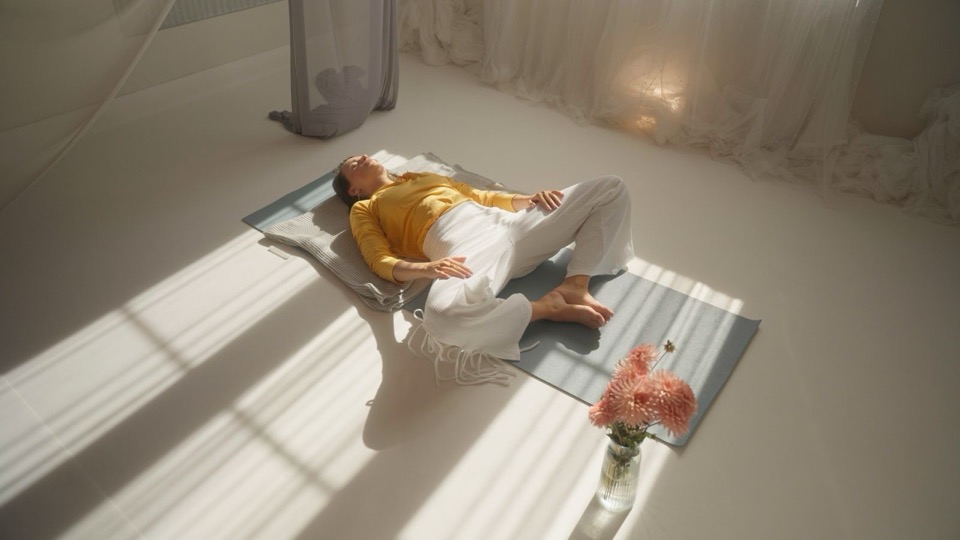
I want you to know that this is a space you can return to again and again. Some of you will return here daily to discover new landscapes. Some of you in moments of need, to remember. Some of you will find one practice and return to it for months.
The practices are built for the long relationship. Over time some will strengthen what is weak and soften what is held. Their aim is simpler, and deeper: to be in practice with your body, and to keep coming back.hers, tidied: "They" → "The practices"
The library is yours for life.
Welcome. Know that you are an important piece of the puzzle and a recipient of this work.
Much of what keeps women from their bodies is economic. Women carry three quarters of the world's unpaid care work,13 and spend a quarter more of their lives in poor health than men.14 The time and money to look after herself is usually the first thing a woman gives away.
Support a woman today - offer her this library as a gift, or get in touch about how you can anonymously support a woman to access this guided work.hers, 22:58 · "get in touch" → hello@yinrhythms.com (the site contact) · a gift cannot be bought yet: the checkout takes the payer's own email
I do not own any of this.
What I have done is gather it, live it, and offer it forward.hers - moved here from with whom (cut map v4)
To my teachers:team, v3: was "With gratitude to my teachers:" - matches her "To the writers…" · "To my therapists…" · the names as ruled 1 Oct 14:18 · Andrea Olsen held
To the writers whose books I practice from:
And many whose names I do not know, but carry within me. To the women of my dreams, the women of my lineage, my women clients and sisters I've walked this path alongside.
Every single woman who has been in my workshops, every woman whom I've been sisters with, has taught me how to come back to these practices and to my body's intelligence.
Filmed in Kraków, Poland, at Bellove Studio, by and produced by Pierre-Jean Fasan (Big Wi Film Agency). Made possible thanks to the support of my inner circle.
Rhythmic Movements
Your founding place is held.
A letter from me is on its way to your inbox now. If it is not there in a few minutes, look in your promotions or spam folder.
On Friday evening, 30 October, we gather in Geneva to open the library together - a full invitation will follow. And on Sunday 1 November the library opens, with your way in sent to the same address.
Until then, come as you are.
with joy and love,
Anna Teresa